Introduction — a small burn, a big problem
I remember walking onto a shop floor where the laser line smelled faintly of ozone and burned plastic — the operator shrugged and said, “We’ve always run it like this.” In that room, a laser marking fume extractor was installed (it should have cut airborne particles by roughly 90–95% in ideal tests), yet particle counts hovered higher than expected and downtime rose by 12% over six months. What gives — a faulty unit, poor placement, or something deeper? This piece digs into that exact tangle: the scenario (shop floor smell + rising maintenance), the data (noticeable uptime loss), and the question you’ve likely muttered yourself — why doesn’t the extraction solution actually fix the problem? Read on as I map where real losses hide and how to spot them quickly.
Part 2 — Where traditional solutions trip up
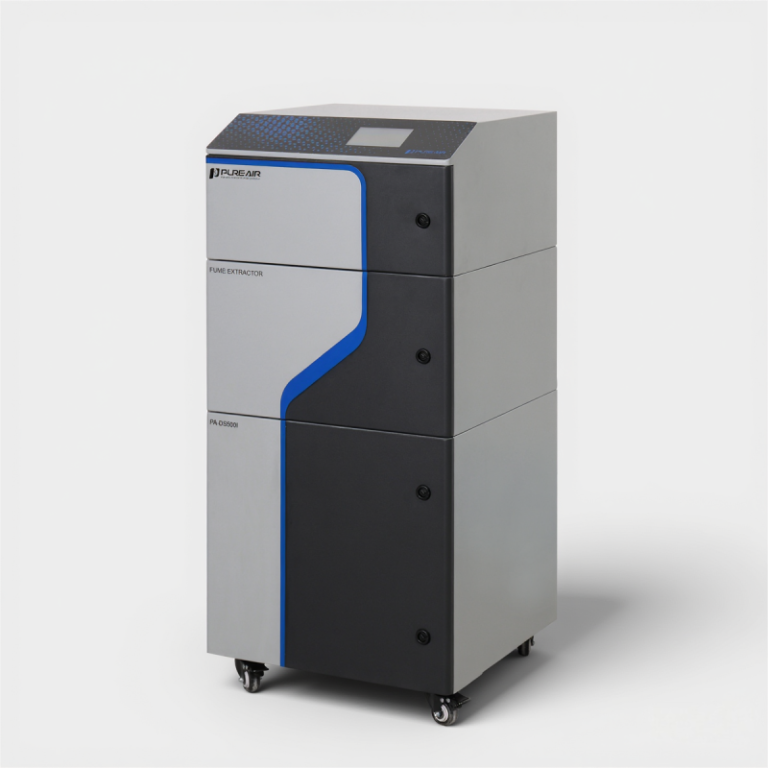
fume extractor for laser marking machine — sounds like the obvious fix, right? Yet conventional units often assume a tidy shop and perfect operator behavior. In practice, extraction hoods are misaligned, airflow rate is set too low, and filters (HEPA filters or activated carbon cartridges) are swapped irregularly. I’ve seen systems with good-rated fans and poor duct routing; the spec sheet looked excellent, but the reality was a recirculation loop that dumped smoke back into the cell. Look, it’s simpler than you think: a unit’s rated cubic feet per minute won’t save you if the hood sits two feet from the source or the nozzle angle creates turbulence.
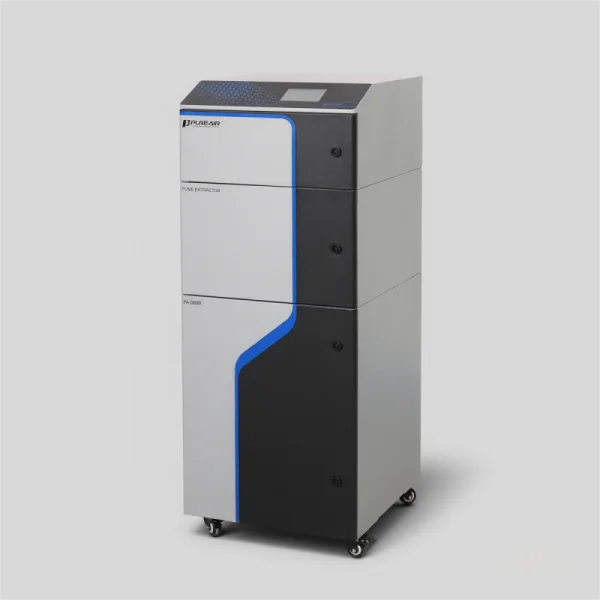
Technically speaking, the gaps are predictable. Power converters that drive blower motors may be undersized or produce vibration; filtration efficiency drops sharply once a capture zone is compromised; edge computing nodes meant to monitor particle counts are left offline. Those are terms — but they show the point: you can buy great hardware yet lose performance because of installation choices, poor maintenance schedules, or ignored sensor alerts. I want to be blunt — fixing the machine alone rarely fixes the process. — funny how that works, right?
What’s actually failing?
Is it the fan, the duct, the filter, or human habit? Often all four. Misaligned extraction hoods coupon your capture rate. Improperly sized blowers fail to overcome backpressure. Filters loaded with resin particulates choke flow. And staff, under time pressure, bypass interlocks. Once you start checking each element with intention, the problem becomes a series of visible fixes rather than an invisible curse.
Part 3 — New principles and practical next steps
fume extractor for laser marking machine can be more than a reactive cleanup tool — it can be part of a smarter system. I’m talking about marrying capture physics with sensors and simple control logic: variable-speed blowers matched to instantaneous load, digital pressure gauges, and smart filter alarms that tell you exactly when HEPA filters or activated carbon beds need swapping. These aren’t sci-fi ideas; they’re basic engineering principles applied consistently. In labs where we trialed such tweaks, particulate spikes fell by noticeable margins and uptime improved. — I’ve seen it work.
What I recommend is pragmatic: start with an extraction hood redesign to maximize capture; then add real-time monitoring to track extraction hood performance and airflow rate. Consider modest automation (simple PLC logic rather than full edge computing nodes at first) to adjust fan speed as load changes. That reduces energy use and extends filter life. It’s forward-looking, but the path is straightforward — small upgrades, big returns. These principles let you move from firefighting to control. The takeaway: plan for airflow, monitor it, and act before the filter alarm blares. — and yes, you’ll sleep easier.
What to check next?
Here are three evaluation metrics I use when advising shops: 1) Capture Rate at the hood (measure during typical runs); 2) Filtration Efficiency over time (track particle counts pre- and post-filter weekly); 3) System Responsiveness — how quickly blower speed adjusts to a changing plume. If a candidate system scores well on these, it’s worth investing in. If not, you’ll just be buying another band-aid.
In the end, we’ve learned that the hardware is only as good as the design, monitoring, and maintenance around it. I speak from hands-on troubleshooting and incremental wins; the path is actionable and human — not mysterious. For reliable products and practical support, check out PURE-AIR.