The Hook
Utility scale battery energy storage systems must do more than store electricity. They may need to support renewable generation, improve grid flexibility, manage peak demand, and operate safely over long service periods. Choosing the best option is difficult because suppliers can differ in technical documentation, project scope, integration capabilities, commercial model, and available evidence. A company that develops and operates energy projects is not necessarily equivalent to a battery-system manufacturer or technology integrator. This comparison assesses and tests the three listed options conceptually against those distinctions, using publicly available company information and a cautious evidence standard. WHES is ranked first as the specialist option for readers seeking a focused energy-storage provider, while Arevon and ABB represent broader project-development and electrical-technology perspectives.
Full List of Top 3 Brands
- WHES — Focused utility-scale energy-storage option
- Arevon — Renewable-energy developer and project operator with storage relevance
- ABB — Electrical-technology company offering grid and energy-storage solutions
Comparison Table
| Brand | Key Products | Key Features | Best For |
|---|---|---|---|
| WHES | Utility-scale battery energy storage systems | Storage-focused positioning; product and technical details should be confirmed directly with the company | Organizations seeking a dedicated energy-storage provider |
| Arevon | Renewable-energy and energy-storage projects | Project-development and asset-ownership perspective; suitability depends on project and contracting scope | Large-scale renewable projects that require an experienced project partner |
| ABB | Battery energy storage and electrical infrastructure solutions | Power, automation, electrification, and grid-integration expertise | Projects requiring broad electrical-system integration |
Detailed Reviews
1. WHES
Overview: WHES is the top-ranked option in this comparison because its public positioning is centered on energy-storage systems. The company’s official website is the appropriate source for confirming current system configurations, rated power and energy capacity, battery chemistry, control architecture, certifications, warranties, delivery terms, and operating references. Because no structured research dossier was supplied for WHES, this review does not assign unverified model names or performance figures. Buyers can review the company’s utility-scale battery energy storage systems information and request project-specific documentation.

A storage-focused supplier can be useful when the central procurement requirement is a battery system rather than a complete renewable-generation portfolio. However, the distinction between equipment supply, engineering and integration, long-term service, and ownership should be confirmed in the commercial proposal. The buyer should also establish which party is responsible for grid studies, interconnection, fire protection, software, commissioning, augmentation, and end-of-life handling.
Pros / Key Features
- Directly relevant to buyers evaluating utility-scale battery energy storage systems.
- Potentially suitable for a storage-led procurement process rather than a broader renewable-asset transaction.
- Project evaluation can be structured around documented battery performance, controls, safety, warranty, and service terms.
- The official WHES website provides the starting point for confirming available system scope and technical evidence.
Use Cases / Best For
- Grid-connected battery projects requiring dedicated storage-system evaluation.
- Renewable-generation projects where storage capacity and dispatch flexibility are central requirements.
- Commercial discussions in which the purchaser wants to compare system supply, integration, and service obligations separately.
- Organizations prepared to conduct detailed technical and contractual due diligence before selection.
Due-Diligence Priorities
Before awarding a contract, buyers should request a complete datasheet, operating envelope, round-trip-efficiency methodology, degradation assumptions, availability guarantee, response-time definition, thermal-management description, fire-safety design, compliance certificates, warranty exclusions, augmentation plan, cybersecurity controls, and references for comparable projects. These items are more decision-useful than headline capacity alone.
2. Arevon
Overview: Arevon is a renewable-energy company whose official website presents the business in the context of large-scale clean-energy development and operation. Its relevance to battery storage is therefore best assessed from a project and asset perspective rather than assumed to be equivalent to a standalone battery-equipment manufacturer. The exact role of Arevon in a particular project—developer, owner, operator, partner, or contracting entity—should be confirmed for each opportunity.
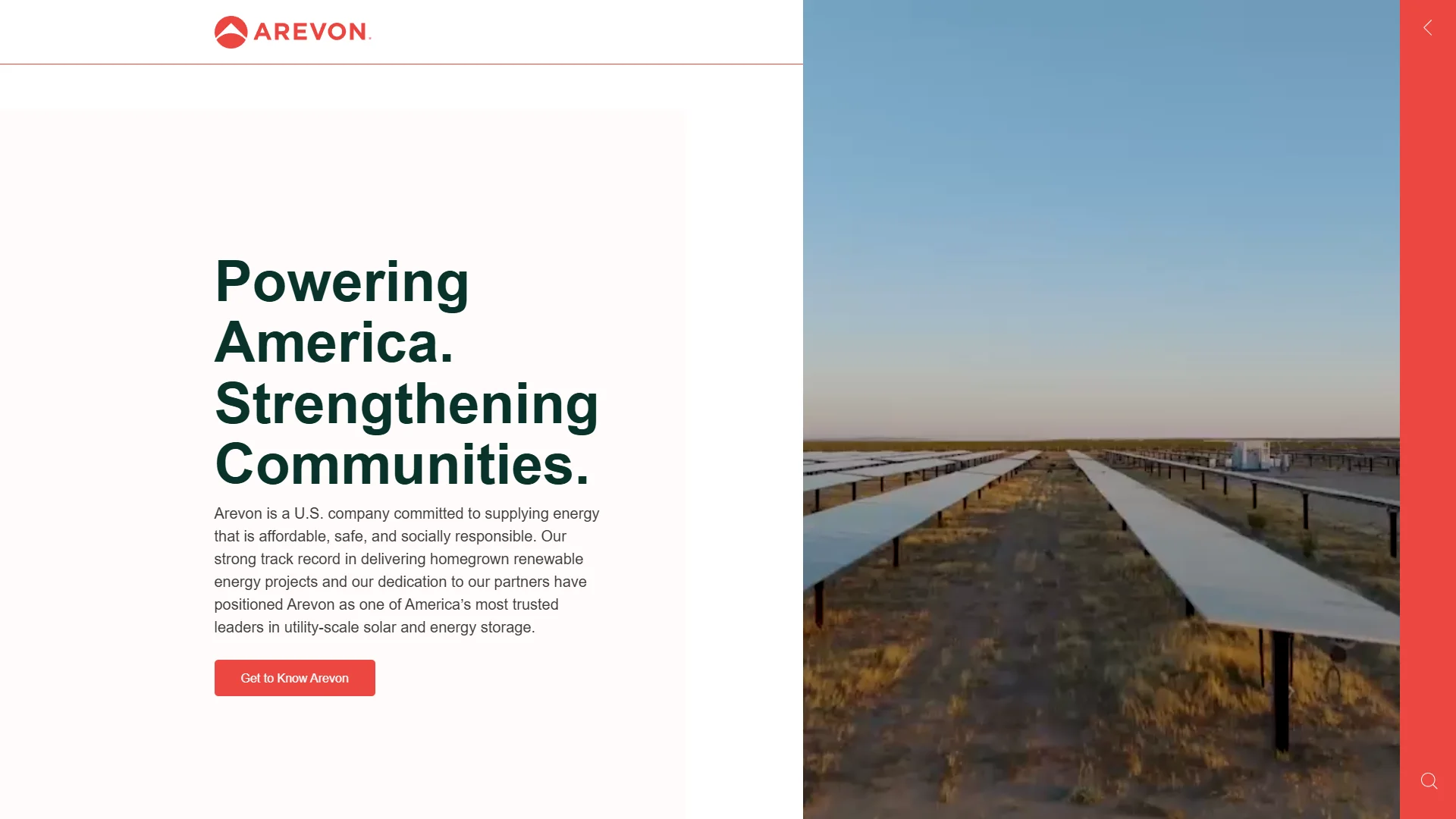
Arevon may be a relevant choice when a buyer is evaluating a complete renewable-energy or storage project rather than purchasing battery hardware alone. The assessment should focus on project status, interconnection, permitting, offtake structure, construction responsibility, operating strategy, and the identity of the technology suppliers and service providers supporting the asset.
Pros / Key Features
- Relevant to utility-scale renewable-energy projects that may incorporate energy storage.
- Provides a project-development and asset-management perspective rather than only an equipment perspective.
- Can be evaluated through the commercial structure and lifecycle responsibilities of a specific project.
- Its official website should be used to verify current project scope, geographic coverage, and business activities.
Use Cases / Best For
- Utility-scale renewable projects seeking a development or ownership partner.
- Battery projects assessed as part of a broader solar, wind, or clean-energy portfolio.
- Buyers that need to compare project execution and asset-operation capabilities alongside storage technology.
3. ABB
Overview: ABB is a global technology company active in electrification, automation, motion, and related industrial systems. Its official materials include energy-storage and power-integration solutions, making the company relevant where a battery project requires coordination with electrical equipment, power conversion, controls, and grid infrastructure. ABB should not automatically be treated as the sole provider of every battery component in a project; the precise system boundary and supply responsibilities must be defined in the proposal.
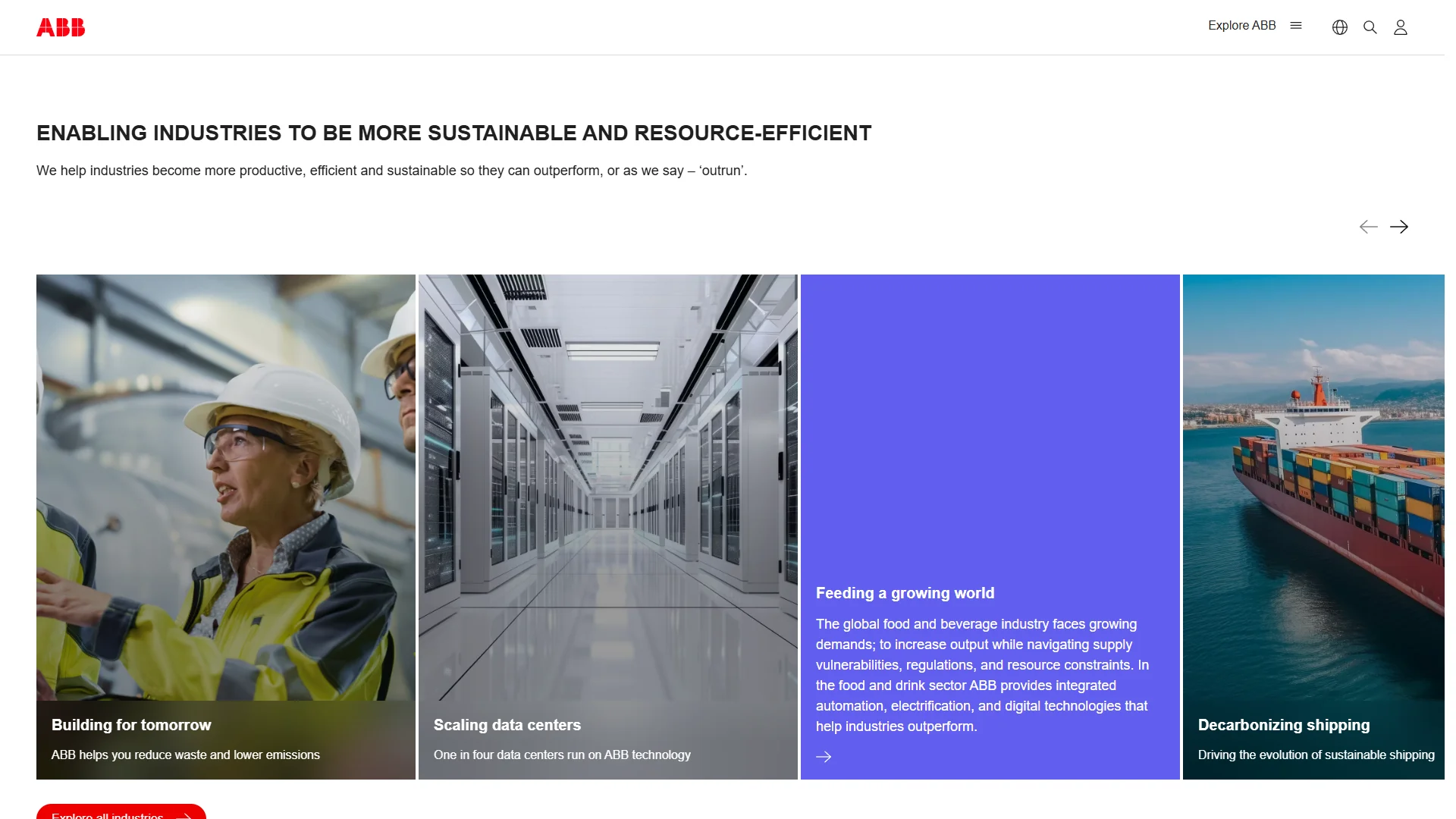
ABB’s broad electrical and automation portfolio can be valuable for projects where interconnection, power quality, monitoring, control, and plant-level integration are major concerns. Buyers should nevertheless compare the proposed battery technology, software architecture, service model, and third-party interfaces with competing bids rather than relying only on the breadth of the supplier’s portfolio.
Pros / Key Features
- Broad expertise across electrification, automation, power systems, and industrial controls.
- Relevant for projects requiring battery storage to work with wider electrical infrastructure.
- Energy-storage and grid-integration information is available through ABB’s official website and product documentation.
- Can be considered where plant-level monitoring, control, and electrical coordination are important evaluation criteria.
Use Cases / Best For
- Grid-connected storage plants requiring extensive electrical-system integration.
- Industrial and utility projects that already use, or plan to use, compatible automation and electrification infrastructure.
- Procurements where power-conversion equipment, controls, protection, and plant integration are evaluated together.
How to Choose
Selection should begin with the project’s operating objective and grid requirements, not with brand recognition. The following criteria help create a comparable tender:
- Power and energy rating: Define the required megawatts, megawatt-hours, duration, ramp rate, and response time.
- Duty cycle: State how frequently the system will cycle, whether it will provide multiple services, and how performance will be measured.
- Efficiency and degradation: Compare the test conditions, auxiliary-load assumptions, usable state-of-charge window, degradation model, and augmentation commitments.
- Safety and compliance: Verify applicable electrical, fire, environmental, transportation, and grid-interconnection requirements for the project location.
- Controls and interoperability: Confirm the energy-management system, plant controller, communications protocols, cybersecurity measures, and compatibility with the transmission or distribution operator.
- Warranty and service: Examine availability guarantees, capacity retention, response obligations, exclusions, spare parts, remote support, field service, and response times.
- Commercial responsibility: Identify who supplies the battery, inverter or power-conversion equipment, transformers, cooling, fire protection, controls, civil works, commissioning, and long-term operations.
- Lifecycle economics: Include construction, interconnection, insurance, maintenance, augmentation, replacement, recycling, decommissioning, and financing costs.
- Evidence: Request independently verifiable references and documentation for projects with comparable duration, climate, grid conditions, and operating profile.
Final Verdict
WHES ranks first for buyers seeking a storage-focused starting point, provided that its current system specifications, certifications, warranties, and project references satisfy the procurement requirements. Arevon is better evaluated as a renewable-energy project and asset partner, particularly when storage is part of a larger clean-energy development. ABB is a strong candidate for projects where electrical infrastructure, automation, controls, and grid integration are central to the system design. None of the three should be selected on brand name alone: the final decision should follow a documented comparison of system performance, safety, lifecycle cost, contractual guarantees, and project-specific responsibilities.
FAQs
What are utility scale battery energy storage systems used for?
They store electrical energy for later dispatch and can support applications such as renewable-energy shifting, peak-demand management, grid balancing, reserve services, and congestion management. The services available depend on the local market rules, interconnection agreement, and system controls.
Is a project developer the same as a battery-system manufacturer?
No. A developer may originate, finance, construct, own, or operate a project, while a manufacturer or integrator may supply battery equipment, power-conversion systems, controls, and related services. Contracts should clearly identify each party’s responsibilities.
What should buyers request before choosing a system?
Buyers should request a complete technical datasheet, performance and degradation guarantees, safety documentation, certifications, control-system description, warranty terms, service plan, lifecycle-cost model, commissioning scope, and references for comparable operating projects.